


345 N Arlington Ave
Reno, NV89501
United States
(775) 348-2221
Get info
Website

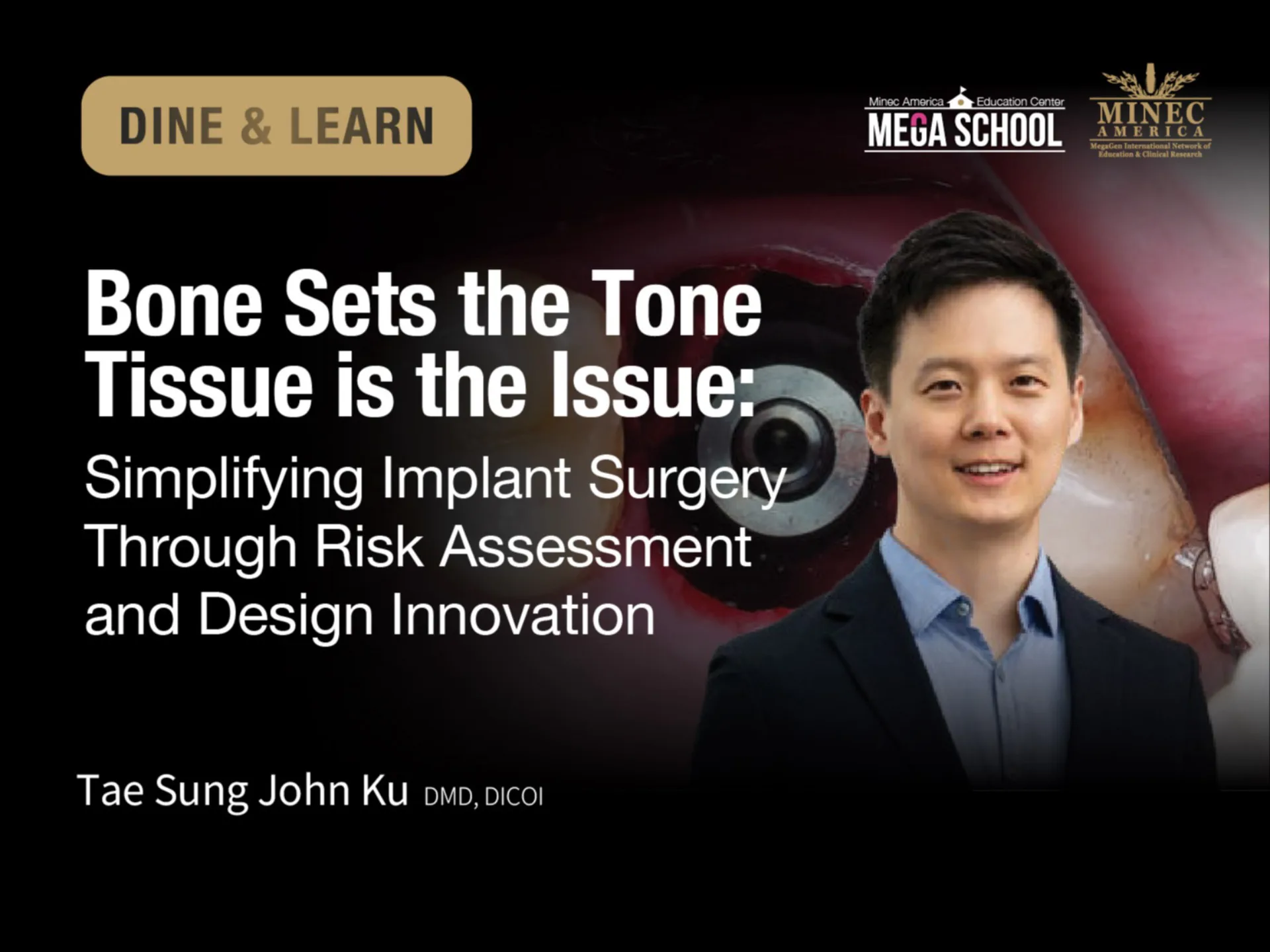
A smoother surgical experience begins before the first drill—with understanding the patient’s risk, the available bone, and the soft tissue demands of the planned restoration. How can implant design help clinicians translate that assessment into simpler, more efficient treatment? This case-based lecture integrates Implant Accelerator’s implant risk assessment framework with an exploration of MegaGen’s BD Cuff implant system. Participants will examine how implant geometry, cuff design, and placement strategy influence decisions at the bone‒soft tissue interface, and where these features may help reduce surgical complexity in appropriately selected cases. Clinical cases will connect risk assessment to implant selection, hard and soft tissue management, and restorative planning. Discussion will address both opportunities to simplify treatment and situations that still require augmentation or a staged approach. The emphasis is on practical decision-making that supports a smoother workflow for clinicians and a less burdensome treatment experience for patients.
• Apply Implant Accelerator’s implant risk assessment framework to identify factors that influence
case selection, surgical complexity, and treatment sequencing
• Explain how implant geometry and cuff design relate to hard and soft tissue management, with
specific discussion of the BD Cuff system.
• Integrate bone anatomy, soft tissue dimensions, and restorative requirements into implant
selection and three-dimensional placement planning.
• Differentiate cases in which implant design may simplify treatment from those requiring additional
hard or soft tissue augmentation, staging, or an alternative approach.
• Develop a risk-informed surgical plan that prioritizes clinical efficiency, patient comfort, and
long-term maintainability.

Educational Method: Lecture
Credit Hours: 2.5 CE
AGD subject code: 690 Implants


Copyright © 2025 MINEC America All Rights Reserved